-
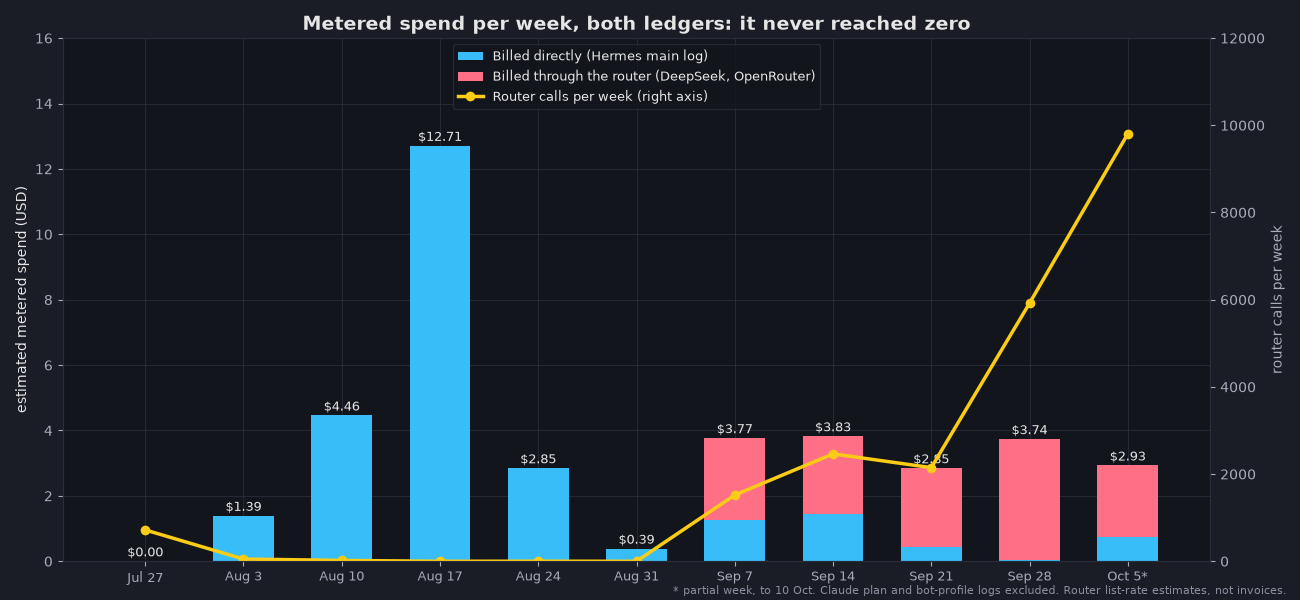
What My AI Setup Costs
Eleven weeks of logged model calls, one ledger I forgot to check, and where the money went
Every model call my agents make is logged on my machine with its model, provider, task, token counts, and an estimated cost. So I don’t have to guess what the setup costs to run. These numbers run from late July to the morning of October 10. They’re estimates from published...
-
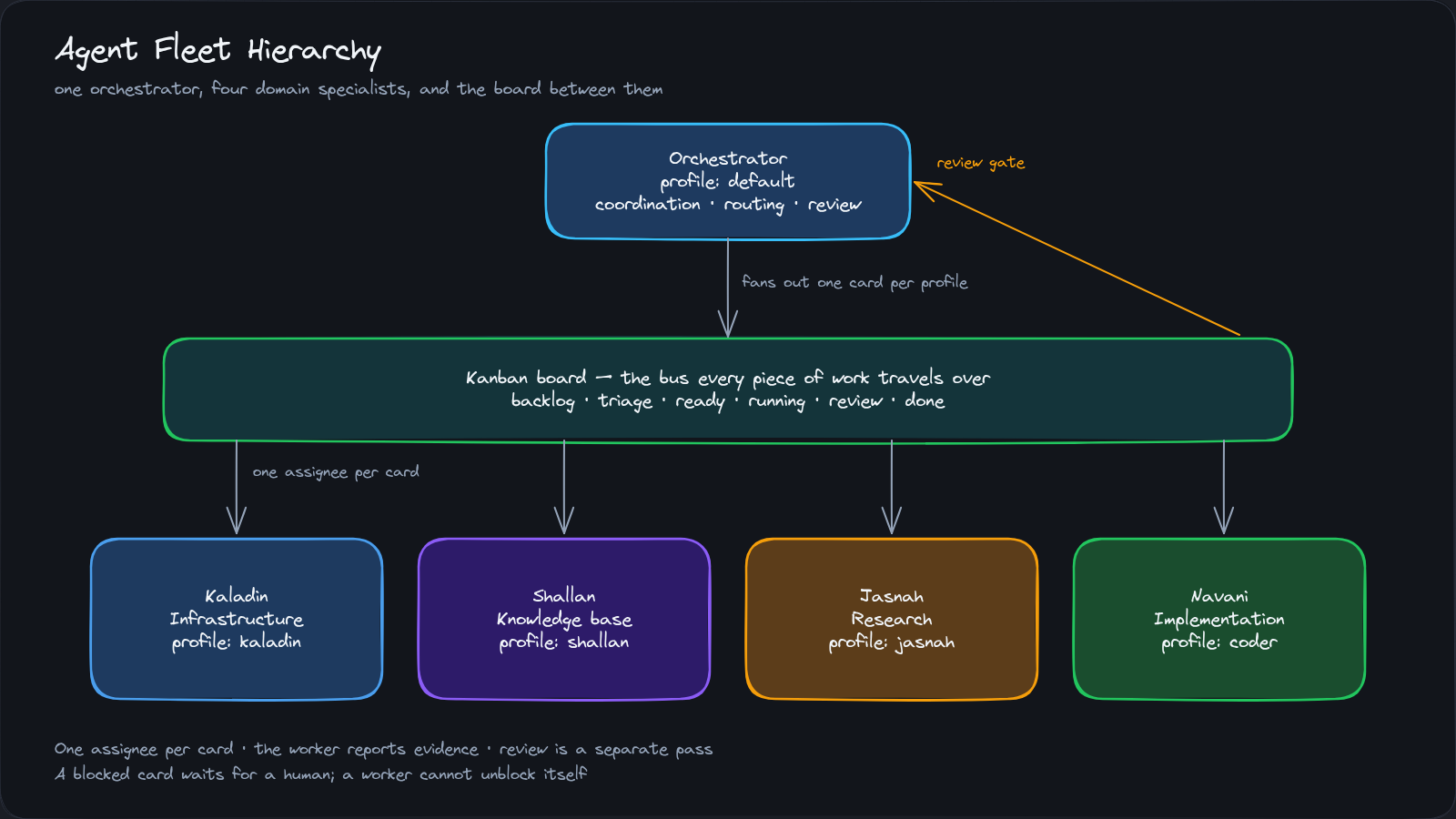
My AI Setup
Five agents, one task board, two memory stores, and a router deciding who gets paid
In July I set out to build an AI lab that ran entirely on my own workstation, on local models and free tiers. I wanted four things: privacy, no network latency, control of the whole stack down to the model weights, and no subscriptions.
-
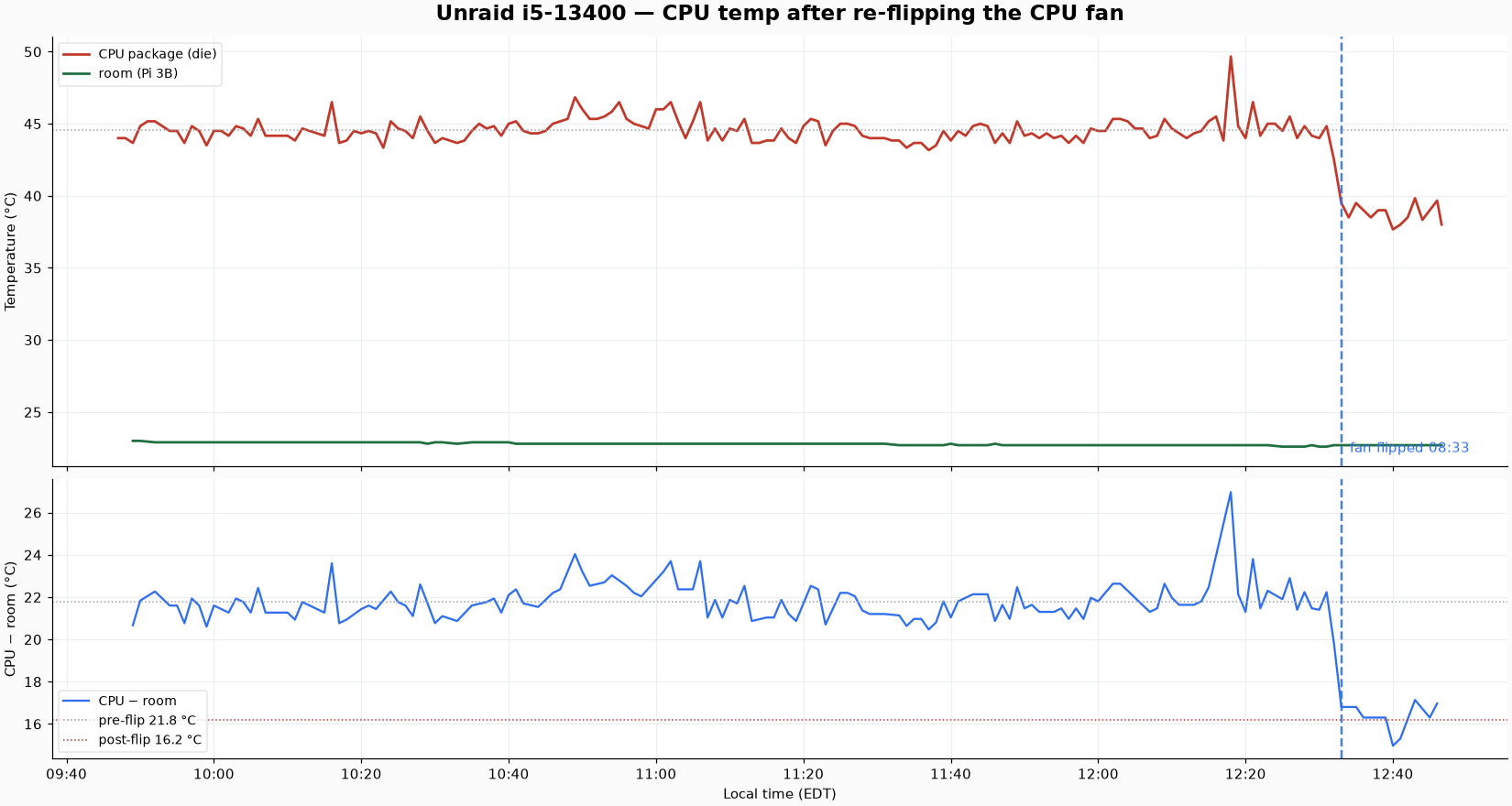
A Reversed CPU Fan Cost My Server 4°C
A 72-hour temperature chart, one wrong hunch about airflow, and the numbers that settled it
My home server — an Unraid box running an Intel i5-13400 under a low-profile Thermalright AXP120-X67 cooler — reports everything: Telegraf ships CPU, sensor and disk telemetry into InfluxDB, and I watch it in Grafana. So when the machine started running warmer, the interesting question wasn’t whether it was warming...
-
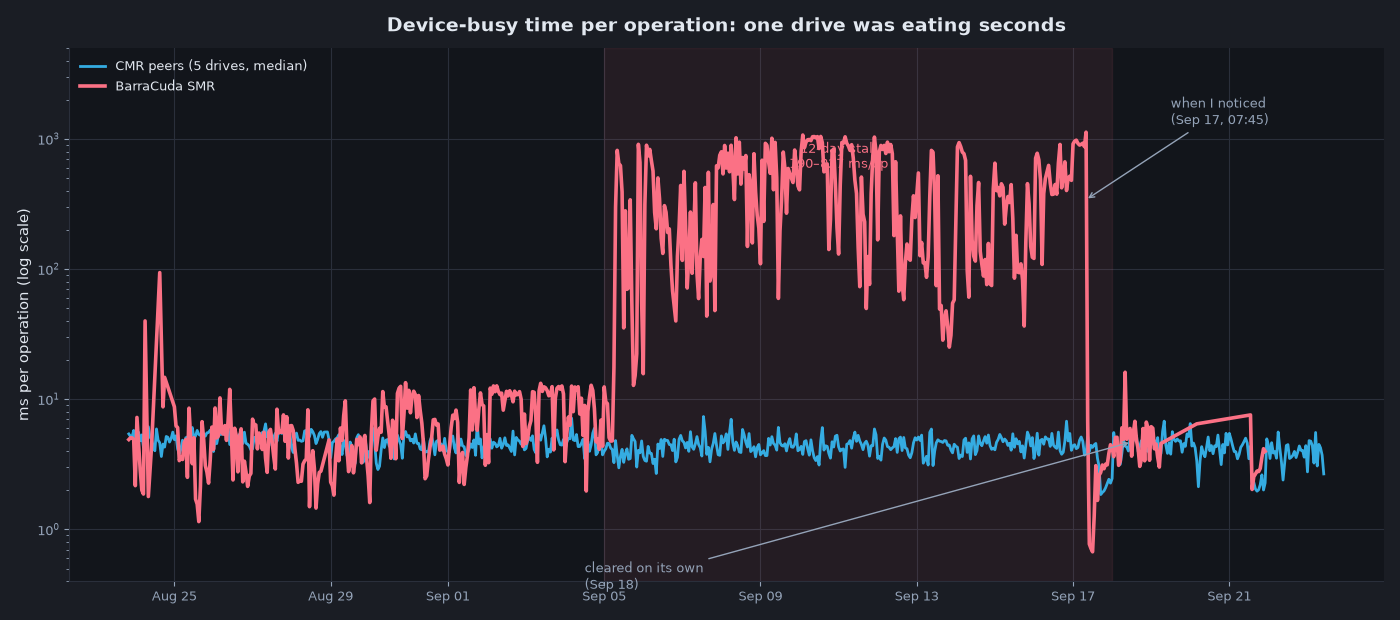
The Disk That Wasn't Broken — and Why SMR Drives Don't Belong in a NAS That's Also a Server
Two drives looked dead in the same week. Neither was. One was a shingled drive choking on its own housekeeping, the other was a marginal SATA cable — and the server's own telemetry told them apart
Two drives in my server looked like they were dying in the same week. Both turned out to be fine — arguably better than fine — and the reason is more interesting than a simple failure story.
-
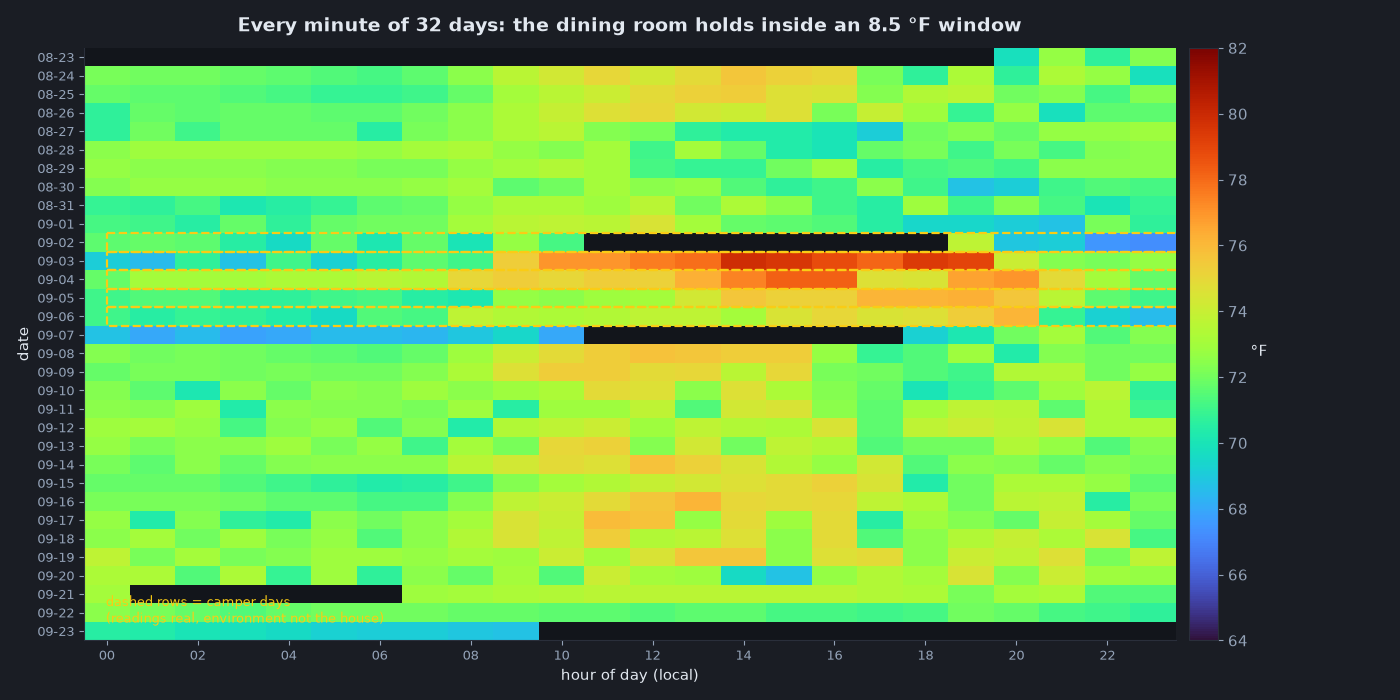
A Month Inside My Home's Microclimate (and 5 Days in a Camper)
32 days of minutely readings from two Raspberry Pis — a house that holds inside 8.5 °F, a daily cycle that barely exists, and a surprise about which gap in the data was the biggest
Two Raspberry Pis in my house have been reporting ambient temperature and humidity every minute for a month: a Pi Zero downstairs in the dining room, and a Pi 3 B upstairs in my office. Each is a tiny thing — a cheap board and a bargain DHT22 sensor —...
-
Where Pattern Classes Are Won and Lost
The maneuvers that separate the top three from the rest of the class, and the penalties that cost the most
A pattern class comes down to a handful of maneuvers. I wanted to know which ones separate the top three from everyone else, and which ones cost riders the class through penalties.
-
Do Judges Favor Certain Horses?
Mostly no. Across 68,059 judge and horse pairings, strong bias shows up in about one in a thousand.
Judges mostly agree with each other. I wanted to know whether some judges place specific horses consistently better or worse than everyone else does, so I compared each judge’s placings for a horse with how that horse placed under all judges.
-
The Deepest Classes and Average Field Sizes
Where a placing means beating the most horses, and how big each discipline's classes really are
Placing in a 5-horse class isn’t the same as placing in a 224-horse class. The biggest class in my database was scheduled for 226 entries. Across 72,316 classes with placings, 426,597 placings in all, the average class size by discipline runs from the seventies down to three.
-
Does the Draw Order Decide Horse Show Placings?
A little. Late draws do slightly better, and mostly in the biggest classes.
Anyone who has shown a horse knows the feeling of drawing late in a big class and wondering if the judge already has the class pinned. I have enough results in my equine-data database now to check, and as of this update I have the published draw sheets themselves, so...
-
Judges Scorecard
Judge the class from the stands — learn AQHA scoring on your own terms
I’m not a judge. I’m a spectator who sits in the stands and watches AQHA horse shows — Reining, Ranch Riding, Trail, Western Riding — and always wondered how they arrive at those numbers. What’s the difference between a +1 and a +1.5? Why does that horse get a 5...
-
Hevy - Weightlifting Analytics
Powerful, research-driven analytics for your Hevy workouts
Hevy-SL is a streamlit app designed to analyze your Hevy workout export. It transforms raw CSV logs into an actionable strength and hypertrophy dashboard. Built for lifters who want data-driven progress tracking.
-
-
-
-
-
-
Exploring Sleep Data: Part 1
Extracting and Cleaning My Own Sleep Data
A Personal Project with Sleep Data
-
New Recipe Update: Family Favorites Now Available
I've just added a ton of delicious, family-made recipes for you to try out at home.
Hey everyone! I am excited to announce a new update to my website - I’ve just added a ton of delicious, family-made recipes for you to try out at home. From snacks and appetizers to main dishes and desserts, there’s something for everyone to enjoy. All of these recipes have...
-
US Food Analysis
Testing Jupyter Notebook to Markdown
I executed the command jupyter nbconvert --to html notebook.ipynb in order to perform a conversion of a Jupyter Notebook file to the html format.
-
-
How to Log into Your Jellyfin Server
Log into Your Jellyfin Media Server
-
Crossing the Line
Image processing in the browser
Line Drawing App is a web application that can transform images into a pencil-sketch-like line drawing. The application is built with Python and Streamlit.
-
Sample blog post
Each post also has a subtitle
This is a demo post to show you how to write blog posts with markdown. I strongly encourage you to take 5 minutes to learn how to write in markdown - it’ll teach you how to transform regular text into bold/italics/headings/tables/etc.
-
Flake it till you make it
Excerpt from Soulshaping by Jeff Brown
Under what circumstances should we step off a path? When is it essential that we finish what we start? If I bought a bag of peanuts and had an allergic reaction, no one would fault me if I threw it out. If I ended a relationship with a woman who...